
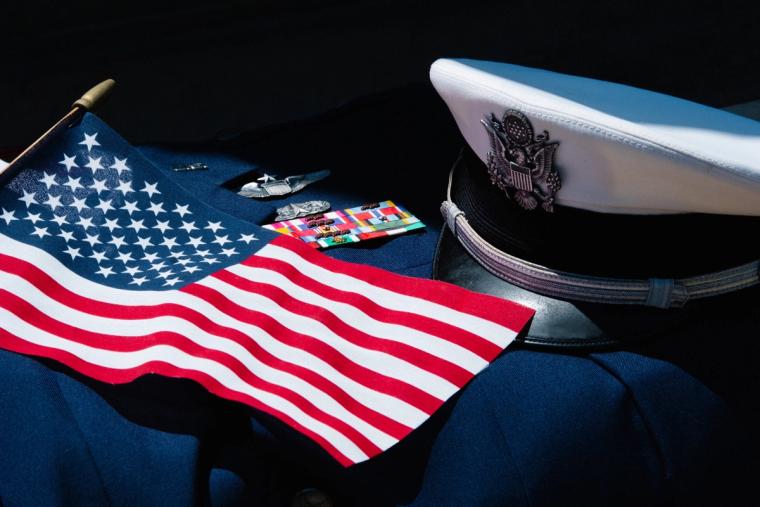
On the last Monday in May, the Memorial Day tribute at the California Central Coast Veterans Cemetery in Seaside has begun at 8 in the morning. Veterans Day on the Monterey Peninsula runs later, at 11 a.m., and the people being honored are standing in the crowd. Memorial Day belongs to the Veterans and service members who died. Veterans Day belongs to everyone who served, and it is aimed at the ones still alive to hear it. Veterans Transition Center of California (VTC) houses and feeds Veterans from its historic Fort Ord campus in Marina, on the same former Army post as that cemetery, and the two days get mixed up all year.
The mix-up is common, and on one of the two days it lands badly. Both dates come out of specific laws, and the laws explain the difference better than the greeting cards do.
Veterans Day vs Memorial Day, in one line
The U.S. Department of Veterans Affairs, or VA, sets out the split on its own Veterans Day facts page (opens in a new tab). Memorial Day remembers “military personnel who died in the service of their country.” Veterans Day is “the day set aside to thank and honor ALL those who served honorably in the military,” in war or in peace, and the VA adds that the day is “largely intended to thank LIVING veterans for their service.”
A third day gets folded into the other two, and it belongs to the people serving right now. Armed Forces Day falls on the third Saturday in May, a date written into the flag code (opens in a new tab). Secretary of Defense Louis Johnson announced it on August 31, 1949 as one day in place of the separate Army, Navy, Marine Corps and Air Force events. The first one was held on May 20, 1950 (opens in a new tab).
Why one day moved to a Monday and the other moved back
Memorial Day started out as Decoration Day. The Grand Army of the Republic was a group of Union Veterans led by Major General John A. Logan. On May 5, 1868 it issued General Orders No. 11 and put the day on May 30. The VA’s National Cemetery Administration (opens in a new tab) writes that the date was picked to ensure availability of “the choicest flowers of springtime” all over the country. The order left the program open: “In this observance no form or ceremony is prescribed.” The first national Decoration Day was held at Arlington National Cemetery on May 30, 1868.
Congress named a birthplace a century later. A resolution in 1966 marked a hundred years of May 30 services in Waterloo, New York, and President Lyndon B. Johnson proclaimed the town the birthplace of the holiday. The same VA history page notes that recent scholarship points instead to the women of Columbus, Georgia, who in April 1866 pressed for a set day to lay flowers on Civil War graves.
Then came the three-day weekend. The Uniform Holiday Bill, signed on June 28, 1968, moved four holidays to Mondays: Washington’s Birthday, Memorial Day, Veterans Day and Columbus Day. Memorial Day left May 30 for the last Monday in May in 1971, and it stayed there. Section 116 of title 36 of the United States Code (opens in a new tab) now opens with one sentence: “The last Monday in May is Memorial Day.”
Veterans Day traveled and came home. The guns of the First World War stopped at the eleventh hour of the eleventh day of the eleventh month in 1918, and an Act approved May 13, 1938 made November 11 a legal holiday under the name Armistice Day. In 1954, at the urging of Veterans groups, the 83rd Congress struck the word Armistice and wrote in the word Veterans. The Monday law then pushed the day to October 25, 1971, which the VA describes (opens in a new tab) as a day marked “with much confusion.” President Gerald R. Ford signed Public Law 94-97 on September 20, 1975, and the date went back to November 11 beginning in 1978.
Congress moved both days in one bill, and only one of them came back. Federal law now lists (opens in a new tab) Memorial Day as the last Monday in May and Veterans Day as November 11.
What to say on each day, and what to skip
On November 11 a greeting is welcome. “Happy Veterans Day” fits a day built to thank people who are around to be thanked, and so does a handshake and a question about where somebody served. The VA settles the spelling on that same page. “Veterans Day does not include an apostrophe but does include an ‘s’ at the end of ‘veterans’ because it is not a day that ‘belongs’ to veterans, it is a day for honoring all veterans.”
On the last Monday in May the subject of the day is a person who did not come home. Congress asks the President (opens in a new tab) each year to call on Americans to observe Memorial Day “by praying, according to their individual religious faith, for permanent peace,” and to set aside a period of the day for it. The National Moment of Remembrance Act (opens in a new tab), signed in December 2000, set aside one minute of every Memorial Day, beginning at 3 p.m. local time. A name works better than a greeting on that morning. Ask a family who they are remembering, then let them talk.
The half-staff rule that belongs to one day only
The flag code runs a few pages, and one rule in it belongs to Memorial Day alone. It sits in section 7 of title 4 of the United States Code (opens in a new tab): “On Memorial Day the flag should be displayed at half-staff until noon only, then raised to the top of the staff.” The list of flag days (opens in a new tab) in the section before it marks Memorial Day the same way, “(half-staff until noon),” and marks no other day that way. Nothing similar covers Veterans Day, so unless the President has ordered half-staff for some other reason, the flag stays at the peak all day on November 11. Drive past a school at noon on the last Monday in May, watch the flag go up, and you are watching that one sentence work.
What the two days look like around Monterey Bay
Memorial Day lands on old Fort Ord ground. The California Central Coast Veterans Cemetery (opens in a new tab) sits at 2900 Parker Flats Road in Seaside, and the California Department of Veterans Affairs, known as CalVet, runs it. The grounds are open to visitors (opens in a new tab) from 8 a.m. to 5 p.m. daily, and Memorial Day services there have begun at 8 in the morning.
CalVet’s own newsroom reported the 2022 service (opens in a new tab) as the first at the cemetery after two years of pandemic cancellations, a reminder that a local ceremony is a plan rather than a guarantee.
Veterans Day spreads out instead of gathering in one place. Ceremonies have started at 11 a.m. (opens in a new tab) in Seaside, Carmel and Pacific Grove, and the county’s parade has been an inland event, run in Salinas by a volunteer committee (opens in a new tab). The longer version, with phone numbers and the places each fall’s dates get posted, is in Veterans Day on the Monterey Peninsula. Anything VTC has scheduled shows up on its events page. Times shift from one year to the next, so check the organizer’s own page before you drive.
If either day lands hard
Twice a year a Veteran can be asked to feel something on cue, in public, on a schedule somebody else set. Some want the ceremony, some want the day to pass, and some spend it away from the phone. If you or a Veteran you know is in crisis, call the Veterans Crisis Line: dial 988, then press 1. You can also text 838255 or chat at VeteransCrisisLine.net (opens in a new tab). It is free, confidential, and answered around the clock.
For the ordinary weeks on either side of a holiday, VTC runs Enrichment Groups at Martinez Hall on its Marina campus, from recovery groups to life skills classes. Many welcome all Veterans, not only residents. Call ahead to confirm the times.
Start with one phone call
VTC’s main line is (831) 883-8387, and the Veteran Resources page points toward the right VTC program, department or community resource.
The calendar sorts the two days without any help: the last Monday in May, then the eleventh of November. One asks you to remember somebody by name. The other asks you to go talk to somebody while you still can.