
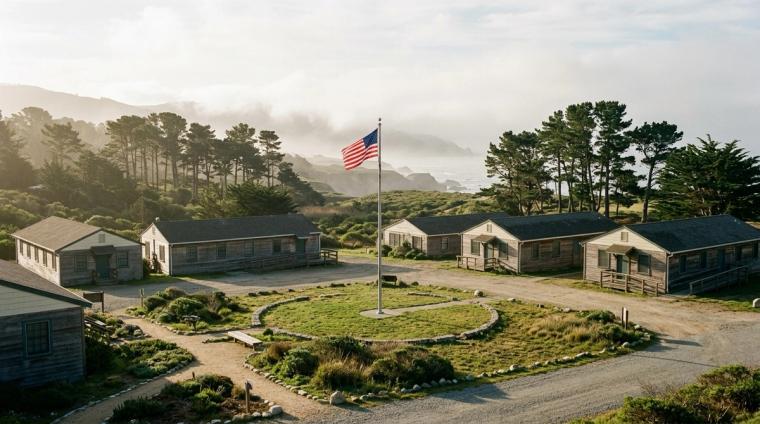
Three kinds of housing sit behind the phrase Veteran housing, and the federal rulebooks tell them apart by what a resident signs. Emergency housing asks for no lease, and a stay there is counted in nights. Transitional housing comes with an occupancy agreement that ends within 24 months, and a case manager comes with it. Permanent housing puts the Veteran’s name on a lease of at least a year, renewable, with no end date built in. Veterans Transition Center of California (VTC) has served Veterans throughout California since 1996, and it runs all three from its historic Fort Ord campus in Marina.
The three types of housing programs for Veterans answer three different questions, and the names blur together in a search result. Somebody who knocks on the wrong door waits in the wrong line, sometimes for months, while the right program is taking calls. A few minutes of reading changes which number gets dialed first.
What a Veteran signs is what separates the three
The U.S. Department of Housing and Urban Development (HUD) writes the definitions most funders borrow, and all three turn on paperwork.
An emergency shelter (opens in a new tab) is a place whose main purpose is temporary shelter, and it asks nobody to sign a lease or an occupancy agreement. Transitional housing (opens in a new tab) requires one. Every resident signs a lease or occupancy agreement, it runs at least a month, and it ends within 24 months without the option to extend. Permanent housing has no set length of stay. The resident is the tenant on a lease of at least one year, the lease renews, and it ends only for cause. When support services come with permanent housing for a resident with a disability, HUD calls that permanent supportive housing.
Set the three definitions side by side and the intake question comes into focus. The useful question is how long a Veteran needs, and what has to happen inside that time.
Emergency housing: a safe bed, counted in nights
The U.S. Department of Veterans Affairs (VA) has one word for the two short-term kinds, interim housing (opens in a new tab). VA calls it temporary housing where a Veteran can stay while on the way to a permanent home. The faster of the two runs on one VA program. Health Care for Homeless Veterans (opens in a new tab), known as HCHV, is built around outreach. Its Contracted Residential Services program provides immediate shelter (opens in a new tab) to Veterans with serious mental health diagnoses or other clinical needs.
VTC’s emergency housing is an HCHV program funded by VA, and it runs up to 60 days: a safe, short-term place for Veterans who need immediate support. That stay is built for speed. Sixty days is a start, not a home.
Transitional housing: a room, a case manager, and a 24-month ceiling
The middle door runs mostly on one VA program. Grant and Per Diem, or GPD, is VA’s largest transitional housing program (opens in a new tab), and VA does not run the houses itself. It awards grants to community organizations, then pays them a daily rate for each Veteran in a bed. The program’s recipient guide (opens in a new tab) quotes the regulation behind it, which says this housing is designed to move Veterans to permanent housing as soon as possible and no later than 24 months.
VTC lists three tracks under Grant Per Diem on its housing programs page. Bridge housing serves Veterans waiting on a voucher from HUD-VASH, which is short for HUD-Veterans Affairs Supportive Housing. Service-intensive housing pairs the bed with individualized case management. Clinical housing offers trauma-informed care with access to licensed clinical support. The average stay at VTC is seven months, and a case manager comes with every placement. The longer explainer, including the discharge rule and what a stay costs, sits in what transitional housing for Veterans is, and who it is for.
Permanent housing: a lease with the Veteran’s name on it
VA describes permanent housing (opens in a new tab) as apartments or houses that Veterans could rent or own, often with a subsidy that helps make the housing affordable.
The best known of those subsidies is HUD-VASH (opens in a new tab). HUD supplies a Housing Choice Voucher, VA supplies case management and clinical services, and a public housing agency runs the voucher alongside its partner VA facility. HUD’s instruction to a Veteran is short. Contact a VA medical center and mention an interest in HUD-VASH. The full walkthrough runs in HUD-VASH, explained without the acronyms.
VTC’s permanent supportive housing has no end date on the lease. It runs through the HUD-VASH voucher program, with a cash-pay option for Veterans who do not qualify for HUD-VASH. VTC also runs Lightfighter Village, permanent affordable housing for Veterans and their families. It is a 71-home community on 2.3 acres of the same campus, 64 studios and 7 two-bedroom homes. Its page reports full occupancy and an active waiting list, and applications go to LFVApplications@vtcmonterey.org.
The help that arrives before any of the three
Supportive Services for Veteran Families (opens in a new tab), or SSVF, is a VA grant to community nonprofits, and it works in both directions. It re-houses families who have already lost their housing, and it helps families who are close to losing a home keep it. SSVF is a VA program run by other organizations, and VTC’s own housing sits in the three categories above.
Eligibility turns on income. VA’s rule defines a very low-income Veteran family (opens in a new tab) as one whose yearly income is no more than 50 percent of the median income for the area.
The money is capped by regulation (opens in a new tab). A participant may receive rental assistance for at most 10 months in a two-year period, and for no more than 6 months in any 12-month stretch. Extremely low-income Veteran families get a longer window, 9 months in 12 and 12 months across two years. The grantee pays the landlord directly. It also has to help the family plan for the rent once the help stops.
What each door costs a Veteran
A transitional program funded by Grant and Per Diem may charge a participant fee. Federal rules (opens in a new tab) hold that fee to no more than 30 percent of monthly income, figured after medical, child care, and court-ordered costs. A program also cannot use its participant agreement to keep out Veterans who have little or no income.
A voucher lands near the same number. HUD tells tenants (opens in a new tab) that the family rent portion is usually 30 percent of adjusted monthly income, and that it may run as high as 40 percent. The public housing agency pays the rest to the landlord.
The share of income looks similar at both ends of the path. What differs is what the money buys, which is 60 days of triage at one end and a renewable lease at the other.
Where a State Veterans Home fits, and where it does not
A search for Veteran housing in California often lands on the Veterans Homes of California, which are a different kind of place. VA describes State Veterans Homes (opens in a new tab) as places that provide nursing home, domiciliary or adult day care. State governments own, operate, and manage them. VA certifies and surveys them, and each state handles its own admissions. Eligibility rests on clinical need and on whether a setting is available, and each state writes its own rules.
Long-term care answers a different question from housing assistance. A Veteran who needs daily nursing care is looking at a state home. A Veteran who needs a bed tonight, or a lease next month, is looking at the three doors above.
How a Veteran on the Central Coast starts
If you or a Veteran you know is in crisis, call the Veterans Crisis Line (opens in a new tab): dial 988, then press 1. You can also text 838255 or chat at VeteransCrisisLine.net. It is free, confidential, and answered around the clock, and you do not have to be enrolled in VA benefits or health care to use it.
For housing, the national starting point is the National Call Center for Homeless Veterans (opens in a new tab) at 877-424-3838. The call is free and confidential, the line is staffed 24 hours a day, and it connects a caller to the nearest VA.
In Monterey County, all three doors run from one campus at 220 Twelfth Street in Marina. The way in is a note to housing@vtcmonterey.org or a call to (831) 883-8387. Pets are welcome across VTC housing programs, which is worth knowing before anyone turns down a bed. Say which door you think you need, then say what you are unsure about, because sorting that out is what the staff do for a living. If the answer turns out to be the waiting list at Lightfighter Village, getting a name down early beats waiting for a better month. Start with the phone call, or send a note from the contact page.